E-bikes are expensive and attract thieves. A modern e-bike—frame, motor, battery—costs £2,000 to £6,000. Battery packs sell for £400 to £1,000 used. For shop owners, this means stock is high-value and at constant theft risk.
The scale of the problem is real. Electric bikes are stolen three times more often than regular bicycles in the UK. In 2025, London recorded 2,966 e-bike thefts. That’s a 21% rise on the year before. Battery theft is now organised. Criminal networks target retail shops during business hours, break in overnight, and steal from deliveries.
The Target: Why E-Bike Retailers Are Vulnerable
Retail theft poses a specific problem for e-bike shops: stock is both high-value and easy to move. Stolen e-bikes have ready resale channels. A thief can remove a £600 battery in seconds with basic tools. An entire bike fits into a van in minutes.
Your customers face theft risk too. This creates liability and trust issues. When customers learn about e-bike thefts in your area—or from your own shop—they lose confidence. Insurance claims rise. Staff feel unsafe. The real cost goes far beyond the stock you lose.
97% of thefts are avoided with a fogging system AND an alarm, compared with 17% with an alarm only. Density manufacturer figure.
This is why retailers combine security layers. An alarm has motion sensors and door contacts. It deters theft and delays thieves. But organised offenders know police response takes time. A fog system with an alarm creates a real barrier they cannot overcome.
Understanding the Risk: Overnight and In-Hours Threats
E-bike shops face two distinct threat scenarios, each requiring different defensive strategies.
During the day, opportunistic theft and organised grab-and-go raids happen fast. A thief enters, targets a battery or motor unit, and exits in under a minute. CCTV and staff presence provide some deterrent. But crowded sales floors create distraction and cover for criminals.
After closing, conditions change. Forced entry may go unnoticed for hours if discovery is delayed until morning. Thieves work methodically when they have time, targeting high-value items first. Without real-time alarm response or immediate physical barriers, nearly all accessible stock is lost.
Battery theft is a separate problem. Factory battery locks break easily. Organised theft networks have price lists for battery models. Premium and high-capacity units bring top money on resale. A shop with fifty lithium batteries worth £25,000 to £50,000 is a marked target.
A Layered Approach: Why Fog Complements Alarm Systems
The best retail security uses two layers: an alarm system (detection) and a fog system (physical barrier) — the layer that actually stops the theft.
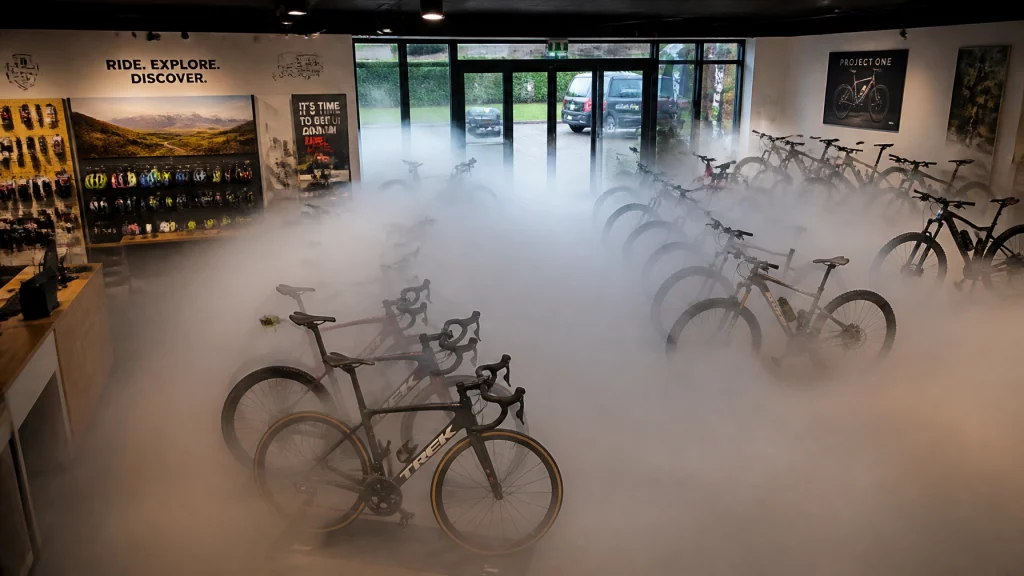
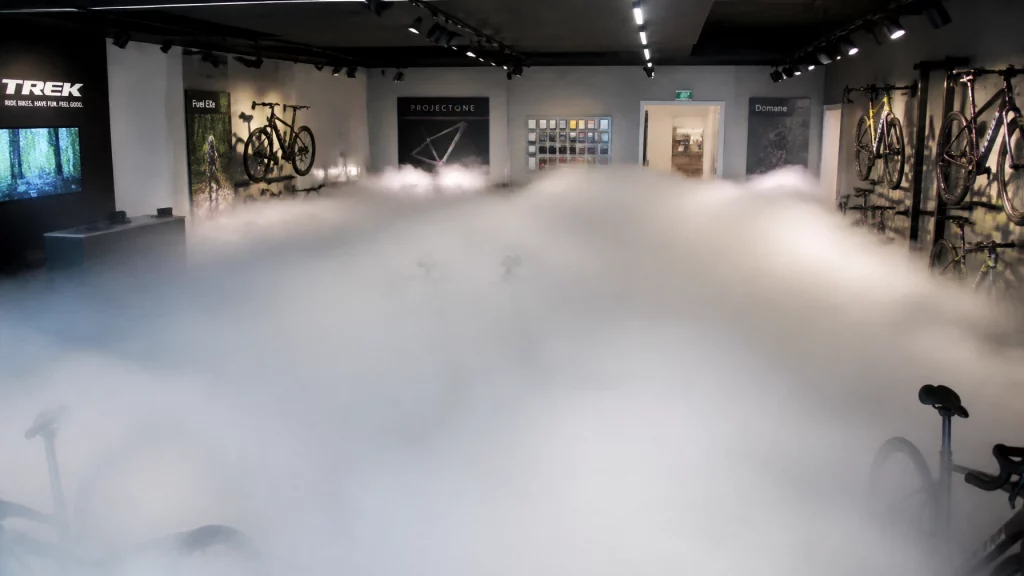
An alarm tells your security provider or police. A fog system activates in seconds. It fills the space so thieves cannot see or find stock. In a 200 m³ shop (showroom plus service area), the generator fills the space with fog in 15 to 30 seconds.
Thieves leave. They cannot see. They cannot grab items. They cannot move safely. The fog is non-toxic and safe for staff and customers. It meets EN 50131-8:2019 standards and is certified for food-contact areas. It poses no risk if you sell accessories or drinks.
Alarm plus fog changes the outcome. A thief knows they have seconds before all visibility dies. Success rate drops hard.
Sizing Fog Coverage for Your Shop Layout
Each shop has its own layout and security need. Fog coverage is measured in air volume, not floor area. The fog must fill the entire space to work.
A small showroom with battery charging station (200–400 m³) is protected by a UNIK generator. The UNIK is our most compact model, generates fog instantly, and requires minimal maintenance. It operates on battery backup for up to six months. This means it functions during power outages when many alarms fail.
A larger retail space (600–900 m³) uses a standard 600 or 900 m³ generator. Multi-floor stores or warehouses scale to the HP6000 system, covering up to 6,000 m³.
The key measure is cubic metres—the total air volume in your protected space. Our sizing process reviews your shop layout, ventilation rates, ceiling height, and integration points with your existing alarm panel. All systems are compatible with any alarm panel brand and integrate seamlessly with Ajax systems and other leading providers.
Integration with Existing Security Infrastructure
Keep your current alarm system. A fog generator plugs into your alarm panel using standard connections. When an alarm triggers—motion sensor, door sensor, panic button—your panel signals the fog generator. It activates in seconds.
For remote monitoring, use ActiveCloud (free with compatible systems). Your security provider monitors fog activation and gets instant alerts. If you use CCTV, the fog system integrates via LAN or API. You get one dashboard showing alarms, fog, and video.
Practical Implementation for E-Bike Retailers
Installation is simple. The generator mounts on a wall or floor in a discreet spot—storage cupboard, service area, or cabinet. Fluid cartridges are replaced on schedule. No complex wiring. No shop disruption.
Staff training covers the essentials. Fog activation is fully automatic once the alarm triggers. Staff should understand that the fog is non-toxic, dissipates rapidly when the space is ventilated, and leaves no residue or marks on bikes, batteries, or retail stock. This reassures staff that accidental activation poses no safety risk.
Insurance providers increasingly recognise fog systems as a legitimate loss-prevention measure, particularly when paired with an alarm. Some insurers reduce premiums, improve coverage limits, or offer better terms for businesses deploying EN 50131-8:2019-certified fog systems alongside standard alarms.
The Real Cost of Stock Loss
One organised raid costs £10,000 to £30,000 in stock losses. Thieves target bikes, batteries, and motors in a single event. Insurance claims trigger your policy excess. Customer confidence drops. Recovery requires time and money on cleaning and restocking.
A fog system represents an operational investment far lower than the cost of even one major theft incident. It costs significantly less than the cumulative damage from repeated smaller thefts over a year. When combined with an alarm system, it delivers measurable, evidence-backed risk reduction that translates directly to lower loss frequency and severity.
Frequently asked questions
How fast does the fog activate?
Fog systems activate within seconds of an alarm trigger. In a typical 200 m³ e-bike shop, the space is filled with fog in 15 to 30 seconds, making it impossible for a thief to locate or remove stock.
Is the fog safe for staff and customers?
Yes. The fog is non-toxic and certified to EN 50131-8:2019. It is food-contact certified, so it poses no hazard to staff, customers, or stock. It dissipates quickly when windows open.
Can I use a fog system with my existing alarm?
Yes. Fog systems integrate directly with any alarm panel using standard relay connections. You keep your current alarm; the fog generator simply plugs in and activates when the alarm triggers.
How do I know what size generator I need?
Coverage depends on the air volume of your space (measured in cubic metres), not floor area. A small showroom (200–400 m³) uses a UNIK; a larger space with workshop area (600–900 m³) uses a standard generator. A professional survey reviews your layout and specifies the right system.
Will fog damage my e-bike stock?
No. The fog leaves no residue on bikes, batteries, or retail stock. It dissipates completely when the space is ventilated, and it is certified safe for product contact.
Related E-Bike Shops security guides
- Protecting an E-Bike Showroom Overnight — Overnight security strategies for retail spaces, including sensor placement.
- Stopping a Break-In Before the Stock Is Gone — Rapid response tactics to prevent loss during active theft.
- How Security Fog Protects High-Value E-Bike Stock — Fog mechanism and benefits across retail scenarios.
If you operate an e-bike shop, a professional site survey is the first step. Our team reviews your alarm, layout, and coverage requirements. We provide a tailored recommendation and outline how a fog system integrates with your infrastructure. Contact us to book a survey or request a specification.